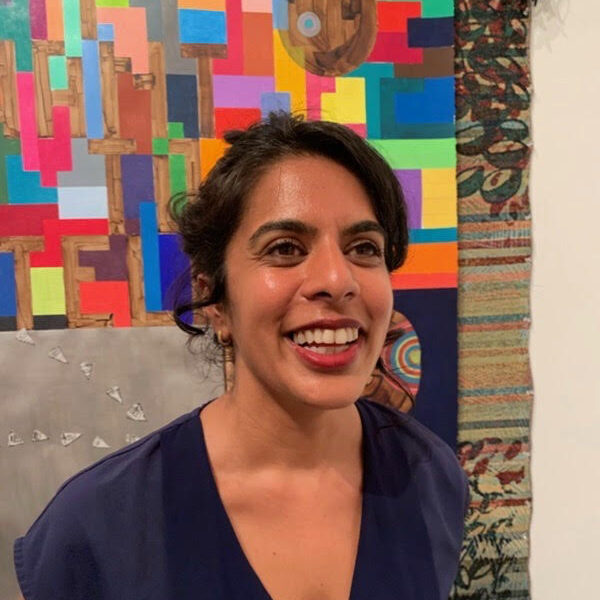
Ujju Aggarwal
Student Fellow
Visiting Scholar
Ujju Aggarwal is Assistant Professor of Anthropology and Experiential Learning at The New School. Her research focuses on public education, urban space, gender, and racial capitalism. She is currently completing her first book, The Color of Choice: Raced Rights, the Structure of Citizenship, and Inequality in Education, a historically informed ethnography of choice as it emerged in the post-Civil Rights period in the United States. Prior to joining The New School, Ujju taught at Sarah Lawrence College, was a Visiting Scholar at the Vermont Center for Fine Arts, and held postdoctoral fellowships at the Institute for Urban Policy Research and Analysis at University of Texas, Austin; and the National Academy of Education/ Spencer Foundation.
Connected Events


Participating Years
2021–2022
Agrarian Questions, Urban Connections, and Planetary Possibilities: Fire, Water, Earth and Air
The material conditions of agrarian life are deeply connected to the political, social, economic, environmental and cultural challenges of contemporary existence at a planetary scale. Agrarian spaces are central to geopolitical disputes over land and other natural resources, and rural social movements play a key role in defending biodiversity and food production.
2016–2017
Consciousness and Revolution
The place of consciousness in radical theory and practice is a subject of significant dispute. Marx believed that much of what we construe as consciousness is “false,” a rationalization or an ideological reflex that stands between people and the “true material needs” of their life processes. Are consciousness and revolution mediated in the same ways today?
2015–2016
Dialectics of Autonomy and Dependence
Self-determination had a heady run in the 20th century, instanced by both revolutionary assertion and homogenizing mimicry. But what is autonomy now? What is dependence? How are these conditions of existence necessarily related – as contradictory rather than contrasting ideologies, representations, relations, outcomes? What forms reveal the dialectic at work? What forms disguise or displace the dynamic?
2011–2012
How to Fight: Transformational Politics and Culture
In response to contemporary crises of economics and politics one often sees polemics caught between reform and revolution but this division may be false from the position of radical politics and thought. As many have shown, reform has a more radical potential, one that takes social forms seriously enough to push their limits, to create new relations, to pose, as it were, non-reformist reform. Are there philosophical, literary, and aesthetic expressions of possibility that give us some purchase on rethinking how we do what we do?