2023–2024
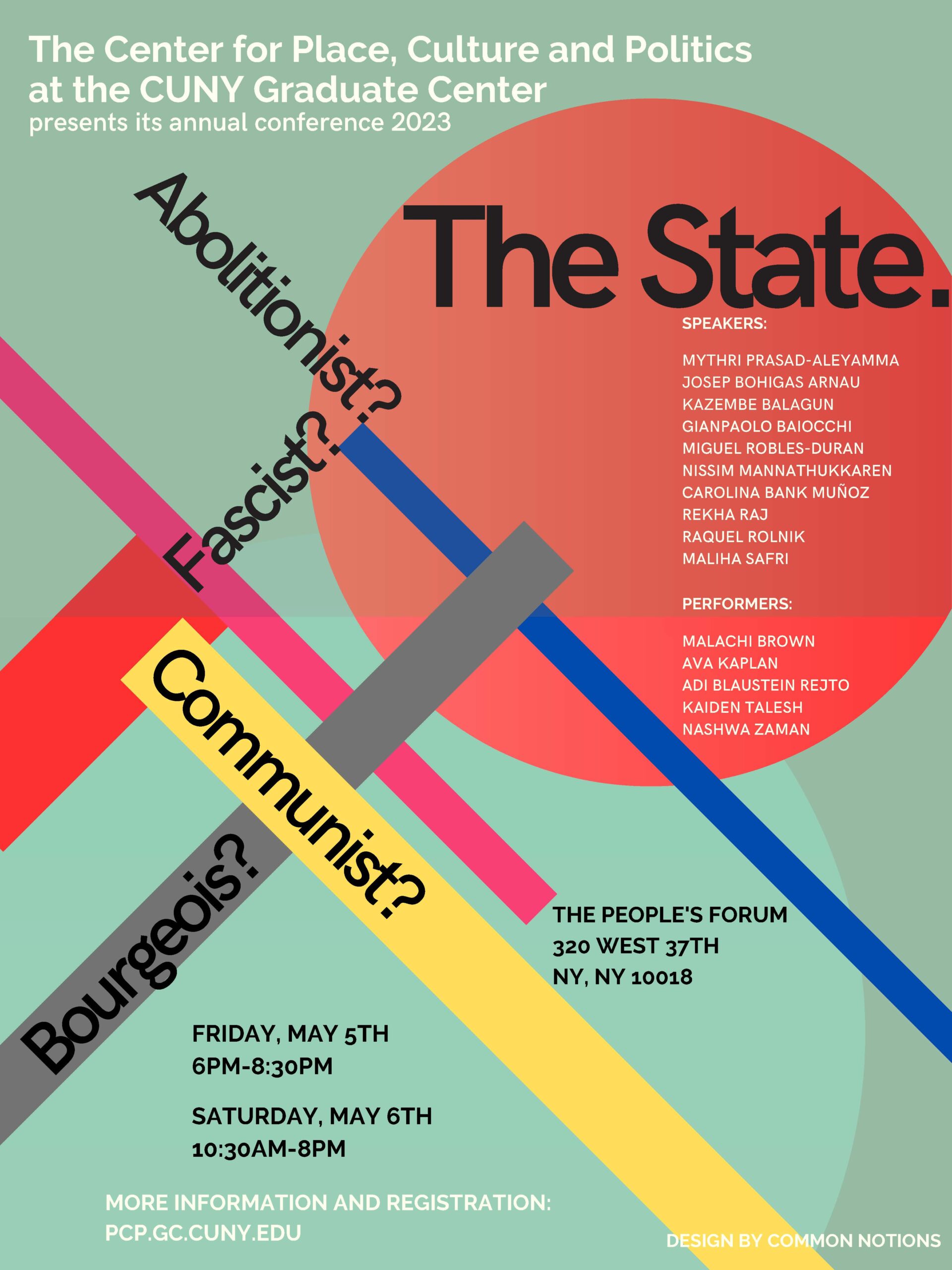
In imagining and forging the future, there is much talk of the state, but often with little detail. What should public goods consist of, and how might they be organized? Can the need for coercion (e.g., to pay taxes for public goods) be realized without the carceral and its underlying apparatuses of organized violence? What forms of sovereignty and its delegation (above or below) are possible and desirable?
2022–2023
Wary of making politics an aesthetic in disguise, radical theory and practice have nevertheless embraced all kinds of artistic provocations and traditions in every form and genre. At the same time, the possibility for fundamental change demands a range of interpretive encounters that might elicit meanings for people whom Julius Scott, writing about a different time, described as “disenchanted people casting about for new options.”
2021–2022
The material conditions of agrarian life are deeply connected to the political, social, economic, environmental and cultural challenges of contemporary existence at a planetary scale. Agrarian spaces are central to geopolitical disputes over land and other natural resources, and rural social movements play a key role in defending biodiversity and food production.
2020–2021
In the context of what appears to be inexorable urbanization, it is just as clear that agrarian questions are deeply enmeshed in the political, social, economic, and cultural challenges of contemporary existence. How have newer regimes of capital, particularly those associated with agri-business and food conglomerates, both formed and fractured agricultural communities?
2019–2020
However the international order is characterized, it is clear that various forms of internationalism are in distress. These are at work both in producing violent conflagration and in generating moving populations across the globe (migrant labor, refugees, asylum seekers, exiles, emigres, etc.). How, then, can internationalism be thought and articulated anew?