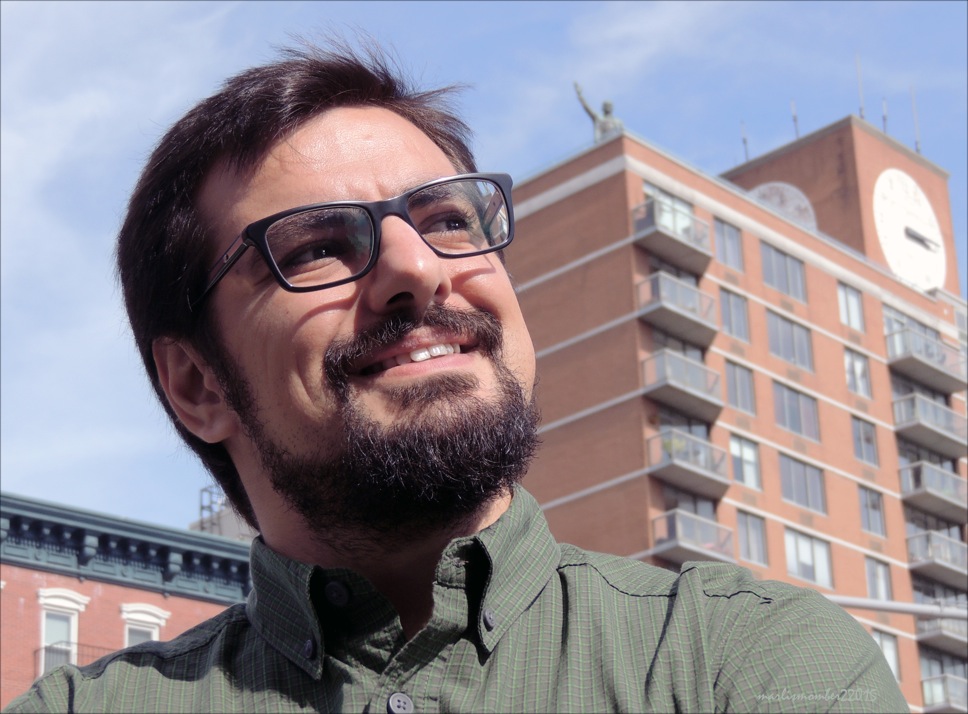
Cagatay Edgucan Sahin
Cagatay Edgucan Sahin is an assistant professor in Labor Economics and Industrial Relations Department, Ordu University/Turkey. He teaches Labor Economics, Industrial Democracy, Social Policy and Labor History. He holds his MA (2005) from Department of Labor Economics, Marmara University/Istanbul. His MA thesis was entitled “Consumtion Society and Creation Process of Consumption Society in Turkey”. He also holds his Ph.D in 2009 from the Department of Labor Economics, Marmara University. His thesis published as book named “Human Capital and Human Resources: A Critical Approach” (in Turkish). He focuses on workers’ self-management and factory occupations, trade union strategies and labor history (especially focused on Turkey and late Ottoman period). He is Scientific and Technological Research Council of Turkey’s fellow at CUNY and his research focuses on to evaluate the relation between formal education and human capital processes of Turkey’s high value added industries, with working class point of view.
Collected Work
The Condition of the Working Class in Turkey: Labour Under Neoliberal Authoritarianism
Decades of neoliberal authoritarianism have propelled Turkey into crisis. Regime change, economic disaster and Erdogan’s ambition to impose ‘one-man rule’ have shaken the foundations of Turkish political life, but what does this mean for workers? Moving beyond the headlines and personalities, this book uncovers the real condition of the working class in modern Turkey. Combining field research and in-depth interviews, it offers cutting-edge analyses of workplace struggles, trade unionism, the AKP’s relationship with neoliberalism, migration, gender, agrarian change and precarity, as well as the COVID-19 pandemic and its impact on workers. Bringing together Turkish activists and scholars, this book is an inside look at the dynamics and contradictions of working-class resistance against Turkey’s neoliberal authoritarian regime; from worker self-management to organized labour and rural struggles.