Peter Hitchcock
Peter Hitchcock is Associate Director of the Center for Place, Culture, and Politics and Professor of English at Baruch College and the CUNY Graduate Center. He is also on the faculty of Women’s Studies and Film Studies at the GC. His books include Dialogics of the Oppressed (Minnesota, 1992), Oscillate Wildly: Space, Body, and Spirit of Millennial Materialism (Minnesota, 1999), Imaginary States: Studies in Cultural Transnationalism(Illinois, 2003), The Long Space: Transnationalism and Postcolonial Form (Stanford, 2009), The New Public Intellectual: Politics, Theory, and the Public Sphere (Palgrave, 2016; coedited with Jeffrey R. Di Leo), Labor in Culture, or, Worker of the World(s) (Palgrave, 2017), The Debt Age (Routledge, 2018; coedited with Jeffrey R. Di Leo and Sophia McClennen), and Biotheory (Routledge, 2020; coedited with Jeffrey R. Di Leo). His latest books are Seriality and Social Change (Chicago, 2025) and an edited collection, Parasitical Logic in Culture and Society (Bloomsbury, 2026). Hitchcock’s research and teaching focus on anticapitalism, postcolonial and decolonial critique, the politics of gender and sexuality, and aesthetics. Recent articles include: “Living the City: On Samuel R. Delany’s Times Square Red, Times Square Blue” for WSQ; “Countering Encounters: Theorizing the Scale of Globality” for a volume on theory as world literature; “Decolonizing Aesthetics: Bakhtin, Modernism, and Anti-Colonial Poetics” for Understanding Bakhtin, Understanding Modernism; “Inertia Creeps” for a volume on left theory and the alt-right; “Paroxysm Politics” for a book on Black Mirror; and “Auguries of Ethics” for a volume on contemporary architectural theory.
On leave 2025-2026.
Collected Work
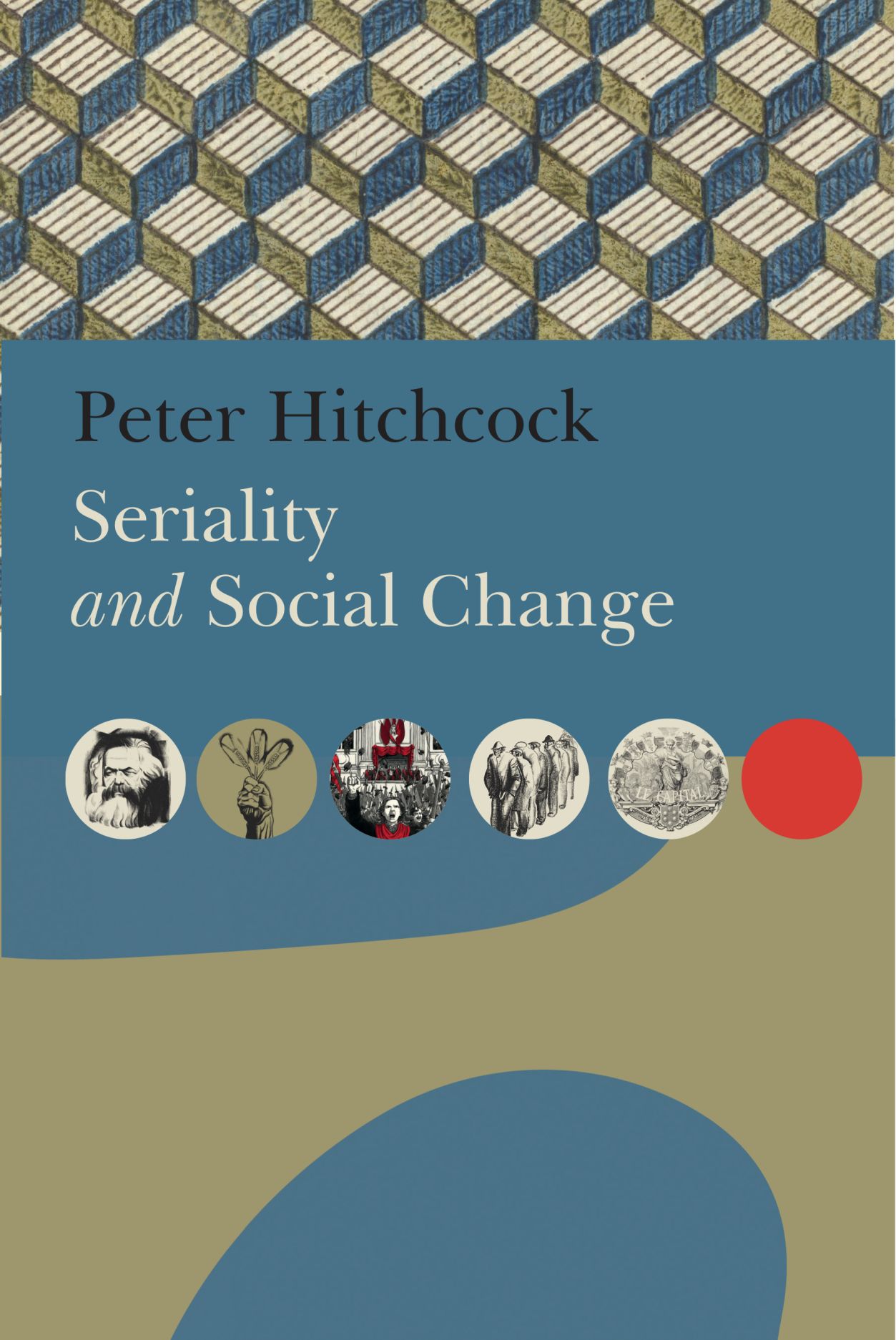
Seriality and Social Change
From Karl Marx’s decision to publish Capital in serial form to contemporary adaptations in manga and graphic novels, this book examines how serialization both democratizes knowledge and shapes the very process of social transformation. This book delves into the paradox of the serial: while it can expand access to radical thought, it can also impose structural limits, slowing or containing the revolutionary potential it seeks to unleash. Does seriality mirror the mechanics of capitalism, or can it be a tool for subverting them? Engaging with this question across genres and forms, Seriality and Social Change invites readers to rethink how revolution is told and imagined over time.
Connected Events

Zahi Zalloua: Fanon, Žižek, and the Question of Palestine