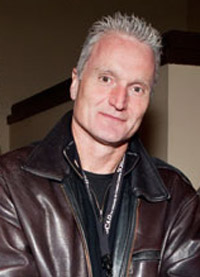
Zahi Zalloua: Fanon, Žižek, and the Question of Palestine
While Frantz Fanon never wrote on the Palestinian question, his work on violence and colonialism is often evoked in scholarship on Palestine/Israel. Turning to Fanon at this moment for ways to better understand and respond to the Gaza War seems unavoidable. The human, embodied by the Jewish Israeli, is defined by its opposition to the wretched—the bloodthirsty Palestinian. Many would agree that describing Palestinians as “human animals” is a dehumanizing practice that, as we know, has a long colonial history. Liberal humanism’s response to Palestinian dehumanization is frequently to call for empathy. At the same time, the image of the victim should also give us pause. This talk asks: Why is it that most people can stand with Palestinians only when they are dead or dying? What does an anticolonial framework bring to our understanding of Palestinian struggle? What ethical and political responsibilities do we bear in answering these questions?
Zahi Zalloua is Cushing Eells Professor of Philosophy and Literature and Director of Indigeneity, Race, and Ethnicity Studies at Whitman College. He is also editor of The Comparatist. His teaching and scholarship engage critical Black studies, the posthuman, and the Palestinian question. His most recent works include Fanon, Žižek, and the Violence of Resistance (2025); The Politics of the Wretched: Race, Reason, and Ressentiment (2024); Solidarity and the Palestinian Cause: Indigeneity, Blackness, and the Promise of Universality (2023); Being Posthuman: Ontologies of the Future (2021); Žižek on Race: Toward an Anti-Racist Future (2020); Theory’s Autoimmunity: Skepticism, Literature, and Philosophy (2018); and Continental Philosophy and the Palestinian Question: Beyond the Jew and the Greek (2017).
Fatima Rahman is a second-year doctoral student in the English program at the CUNY Graduate Center. Her research interests involve examining the political subtext of postcolonial literature, with particular emphasis on Marxist theories regarding alienation, the subaltern, and statecraft.
Peter Hitchcock is Associate Director of the Center for Place, Culture, and Politics. He is Distinguished Professor of English at Baruch College and the CUNY Graduate Center. He is also in the Department of Comparative Literature and the Certificate Programs of Women’s Studies and Film Studies at the Graduate Center. He teaches and researches literature, film, capitalism, colonialism, and cultural theory. His next books are Seriality and Social Change and an edited collection, Parasitical Logic in Culture and Society. He is currently writing a book on the global literary with the title Whole World(s).
This event is organized by the Center for Place, Culture, and Politics. It is free and open to the public.