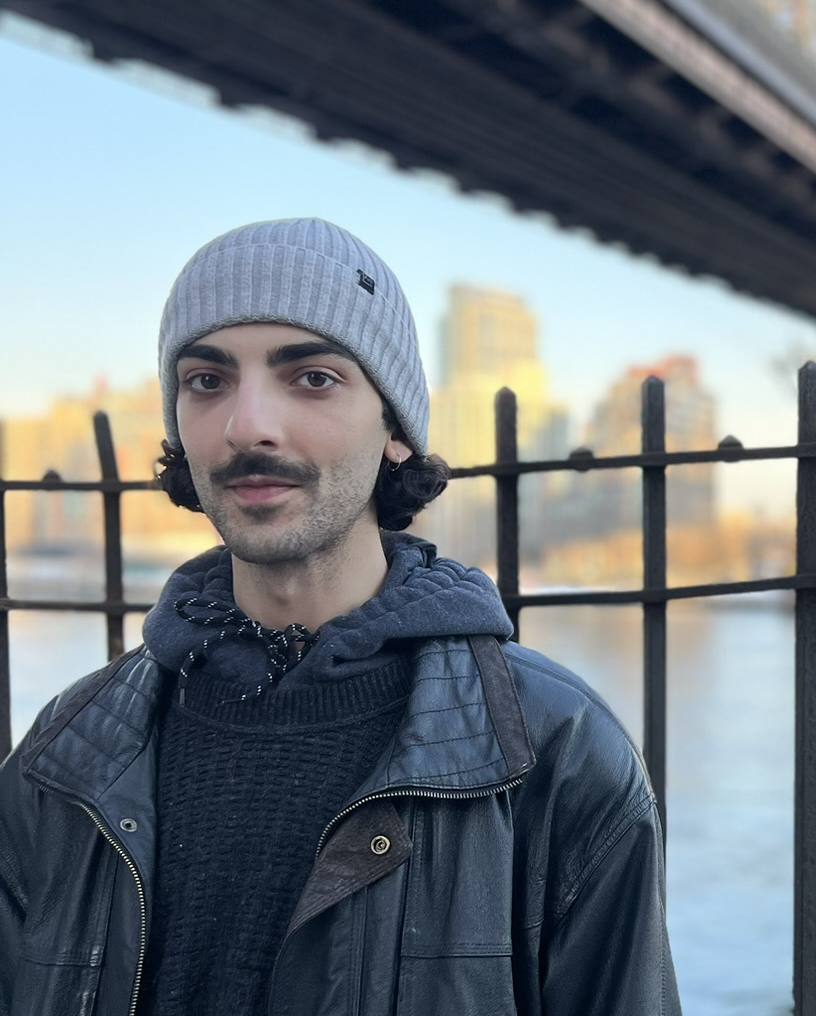
Khalil Habrih
Khalil Habrih is a visiting scholar at the CPCP and SSHRC Postdoctoral Fellow in Anthropology and Design at Parsons/The New School. Khalil Habrih received training in Anthropology and Political Sociology at the University of Ottawa, the École des Hautes études of sciences sociales and the Institut d’études politiques de Paris. Their PhD research examines prefigurative urbanism in North Paris and the relations between urbanistic expertise, queer cultural forms, and racial difference. It received the 2025 Governor General’s Gold Medal for outstanding achievement in the Humanities. Khalil Habrih’s first book, Traces of Violence. Writings on the Disaster in Paris, France (University of California Press), coauthored with Robert Desjarlais, received the 2023 William A. Douglass Book Prize. Khalil’s current research focuses on modern colonial representations of scabies, alongside other dermatological diseases, to analyze the historical production of racist stigma and its infrastructural effects in the French empire. Drawing on medical and colonial archives, fieldwork in urban public health, photography and sculpture, this research considers how the aesthetics and politics of dermatological etiology and epidemiology affect the (im)mobilities of racialized people in contemporary Paris.