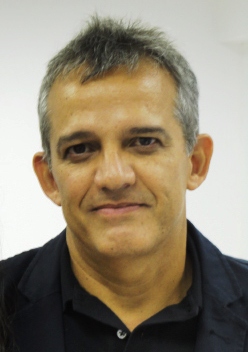
Márcio Moraes Valença
Márcio Moraes Valença is a Professor of Public Policies at the Federal University of Rio Grande do Norte (UFRN), Brazil. With a BA in Architecture (DAU-UFPE, 1982); a Diploma in Urban Development (MDU-UFPE, 1988); an MA and a DPhil in Urban and Regional Studies (University of Sussex, 1990 and 1997), he has also spent two years as a Visiting Scholar at the London School of Economics and Political Science (1998-2000) and one year at the Architectural Association School of Architecture (AA, London) and the School of Oriental and Asian Studies (SOAS, University of London, 2014). He has spent shorter periods of time at Witwatersrand University (South Africa, 2005) and the University of Lisbon (2012). He was Dean of Humanities at UFRN, from 2003 to 2011 and contributed to the set-up of several undergraduate and postgraduate programmes as well as a new department at UFRN. He has supervised 25 MPhil and DPhil theses. He has been in the editorial boards of journals, like Geoforum, GOT, Cadernos Metrópole and Revista Brasileira de Estudos Urbanos e Regionais. His publications include books and papers in Portuguese and in English.
Collected Work
“Harveyan Utopian Thought and Social Justice: Approaching Public Space”
This essay explores the idea of public space by reviewing David Harvey’s utopian thought about social justice and the future of cities. It analyses several of his writings as well as conceptual constructs, including those of “dialectical utopianism” and “territorial distributive justice,” the modified versions of Henri Lefebvre’s “right to the city” and of Boaventura de Sousa Santos’ “subaltern [insurgent] cosmopolitanism.” Having produced, during the last four decades, a consistent and profound critique (and corresponding theorization) of contemporary capitalist society and its urban development, Harvey finds it critical that, at some point in the future, all institutional and physical infrastructure set up by bourgeois society during the last five centuries or so be replaced by another that gives rise to an alternative, relational space and place which are born out of “philosophical reflection,” an “assessment of practical requirements and basic human needs” and the “ferment of social movements.”