Ángeles Donoso Macaya
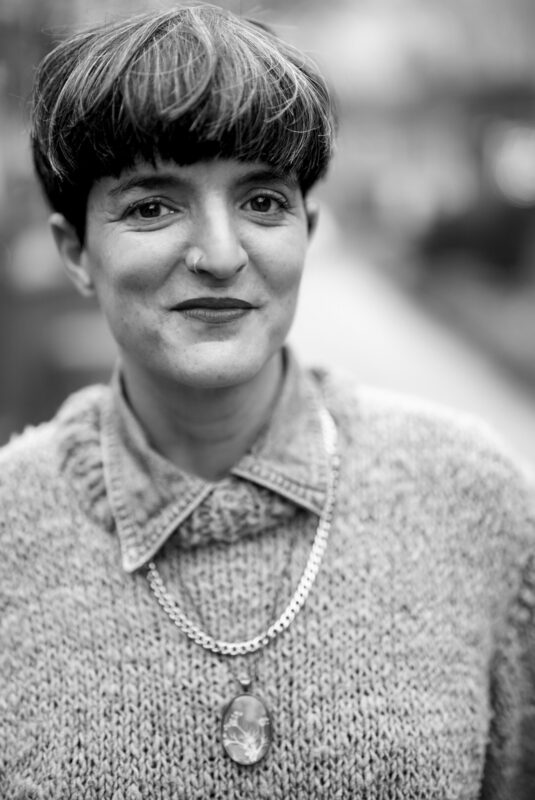
Ángeles Donoso Macaya (she/they) is an immigrant feminist scholar and writer from Santiago, Chile, based in New York. She is Professor of Spanish at BMCC and affiliated faculty in the Ph.D. Program in Latin American, Iberian, and Latino Cultures and Advanced Certificate in Public Scholarship at The CUNY Graduate Center. Her teaching interests and writing span Latin American and Caribbean photography, human rights activism and counter-archival production, documentary film, (trans)feminisms, migration studies, memory studies, public humanities, and environmental humanities. She co-edited WSQ´s “No estamos a la intemperie: Open Call” (Spring 2025) and is author of The Insubordination of Photography (U Florida Press 2020; 2023) / La insubordinación de la fotografía (Metales 2021); Lanallwe (Tusquets 2023); and archivo imperfecto (Metales Pesados 2023; with photographer Paz Errázuriz). Between 2020-2023, she co-led Archives in Common: Migrant Practices/ Knowledges/Memory. Ángeles is member of The Social Text Collective and CUNY FSJP. She is co-founder of the collective somoslacélula.
Ángeles Donoso Macaya served as the interim associate director of the CPCP in 2025–2026.
Collected Work
“Who Were Chile’s Disappeared?”
In “Who Were Chile’s Disappeared?,” Ángeles Donoso Macaya examines Mila Burns’s Dictatorship across Borders: Brazil, Chile, and the South American Cold War, exploring the interconnected histories of authoritarianism, exile, and political repression in South America. Through oral histories, archival research, and declassified documents, Burns reveals how Brazilian and Chilean regimes collaborated to surveil, persecute, torture, and eliminate political opponents across national borders. The article highlights the experiences of Brazilian exiles in Chile, exposing the complicity of diplomatic institutions, business elites, and intelligence agencies in sustaining authoritarian power. Ultimately, it connects Cold War histories of disappearance to contemporary migration and state violence.